
Which On-Page SEO Strategies Help Hotels Rank Higher for Location-Based Searches?
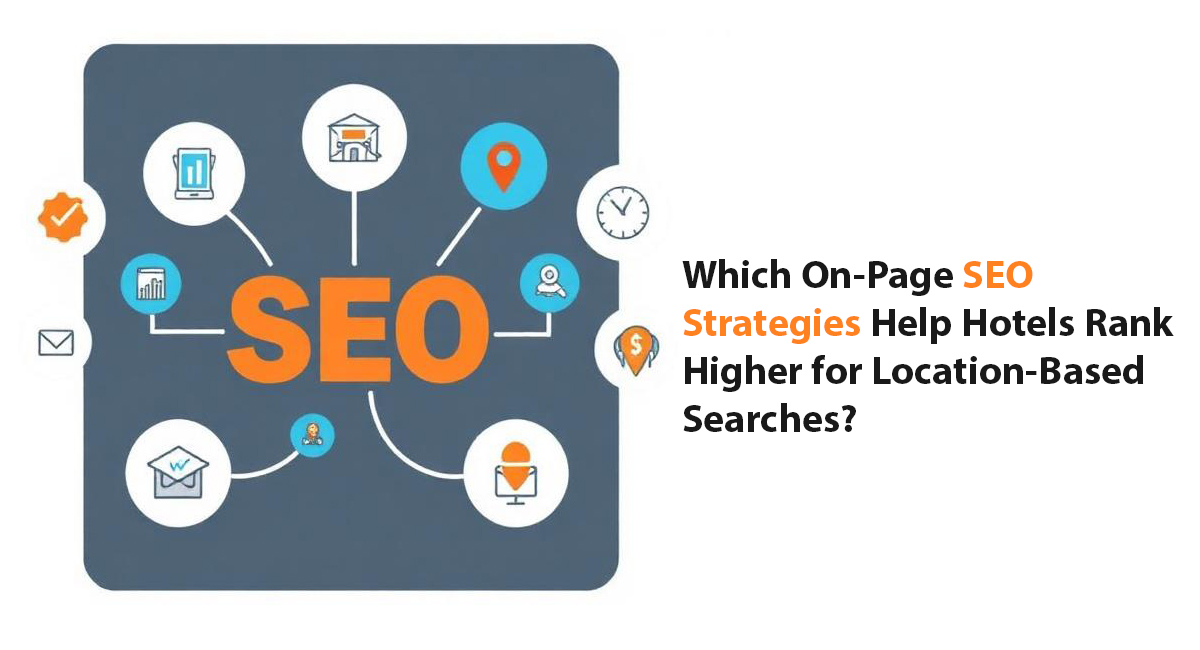
In the hospitality industry, achieving strong visibility in search engines is essential for attracting potential guests. Implementing effective SEO strategies for hotel websites can significantly improve organic traffic and increase bookings. The searches related to location are particularly significant since tourists usually seek places to stay close to a particular location or district. With the on-page SEO approach, hotels can adopt the strategy of ensuring that its web content is available in a way that matches the user intent, and those of the search engines. Optimization, as well as increased rankings, does more than boosting the rankings, but also improving the overall user experience, which makes the hotel more accessible and searchable by the travelers.
Understanding On-Page SEO for Hotels
On-page SEO is described as methods employed on a site itself in order to enhance search engine positions. In the case of hotels, this involves improving on content, HTML and general organization of the web site. Tuning on-page SEO to the location-related queries will allow the hotels to attract tourists who want to find accommodation in specific cities, neighborhoods, or close to the popular sights. The efficient use of on-page techniques assist search engines to learn about the location of the hotel, services and other special features, which is more likely to be listed in the local search results.
Key On-Page SEO Strategies
1. Optimize Title Tags and Meta Descriptions
The initial impression users have on search results is title tags and meta description. The title and the meta description must include the hotel location and essential facilities in a natural way to enhance relevance. To prevent the problem of duplicate content, make sure that the title and description of every page of the webpage are different.
2. Use Location-Based Keywords
Incorporate geographical keywords in all the textual information on your web pages, headings, as well as the address lines. This assists search engines to match your pages with questions posed by people who are interested in your area of hotels.
3. Create High-Quality Location Pages
Create individual pages to various places or neighbourhoods which your hotel serves. Add information regarding the local attractions, transportation, and local restaurants. This proves to be relevant to search engines and it conveys information that is valuable to the travelers.
4. Optimize Header Tags (H1, H2, H3)
Use header tags to organize content clearly. Include keywords in headings where appropriate. For example, an H2 might read, “Luxury Accommodations Near Central Park,” which is both informative and keyword-rich.
5. Enhance Images with Alt Text
Have descriptive alt text on every picture, and have it on the exterior of the hotel, the rooms and services. Include location specific keywords that would come naturally to enhance the visibility of the search engines and help the user who relies on a screen reader.
6. Improve Internal Linking
Link relevant pages to each other within the website. For instance, link a blog post about local attractions to the main rooms or booking page. Internal linking distributes page authority and helps search engines understand website hierarchy.
7. Ensure Mobile-Friendly Design
Responsive design will make sure that your web site looks well on any device. Search engines also give more preference to mobile friendly websites and this is very important since most travelers use smartphones to research hotels.
8. Optimize Page Speed
Decent loading speeds make the pages easier to access and are preferable to the search engines. Image compression, image trimming, and trustful hosting are ways of enhancing the speed of the pages.
Ready to Transform Your Online Presence?
Effective SEO of hotel websites will guarantee the growth in the long run and the chances of increased occupancy rates through organic search. Proper use of the effective SEO strategies for hotel websites guarantees the future expansion and increases the chances of greater occupancy rates via organic searches.
Need to promote your online experience and increase your business? At Uniterrene Websoft, we focus on innovative, outcome-oriented, and results oriented digital solutions that will suit your needs. Are you willing to make your website a success tool? Get your Free more visibility, greater engagement and quantifiable results with the assistance of our experts.
FAQs
What are the main on-page SEO strategies for hotels?
Maximize titles, meta descriptions, headings, images, internal links and mobile-friendliness.
How can location-based keywords help hotels?
They make pages more relevant for users searching for hotels in specific areas.
Why is image optimization important?
It speeds up load times, accessibility and aids search engines to comprehend content.
How does mobile-friendly design affect rankings?
Sites that are mobile friendly are more ranked and give a better experience to the user.
Which SEO strategies for hotel websites improve visibility?
Local keywords, clear headings, faster mobile pages, good content, and internal links.