

 Web & UI/UX Design
 App Design
 Logo & Brand Identity
 Social Media Ads
 SEO
SEO
 SMM
SMM
 SMO
SMO
 PPC
PPC
 Content Marketing
 Email Marketing
 Decision Management Systems
 Chatbot Development
 Deep Learning Models
 Machine Learning Solutions
 NLP
NLP
 WordPress
 Joomla
 Drupal
 Webflow
 Wix
Wix
 Squarespace
 Hubspot CMS
 MongoDB
 Node.js
 Angular
 React.js
 Express.js
 WooCommerce
 Magento
 Shopify
 .NET
.NET
 Python
 PHP
PHP
 C#
C#
 Laravel
 Cake PHP
 Cloud Development
 CI/CD Pipeline Setup
 Containerization (Docker, Kubernetes)
 Serverless Architecture
 Hybrid App Development
 Flutter Development
 Kotlin and Java Development
 Swift Development
 Progressive Web Apps
 2D & 3D Game Design
 Unity/Unreal Engine Development
 AR/VR Game Experinces



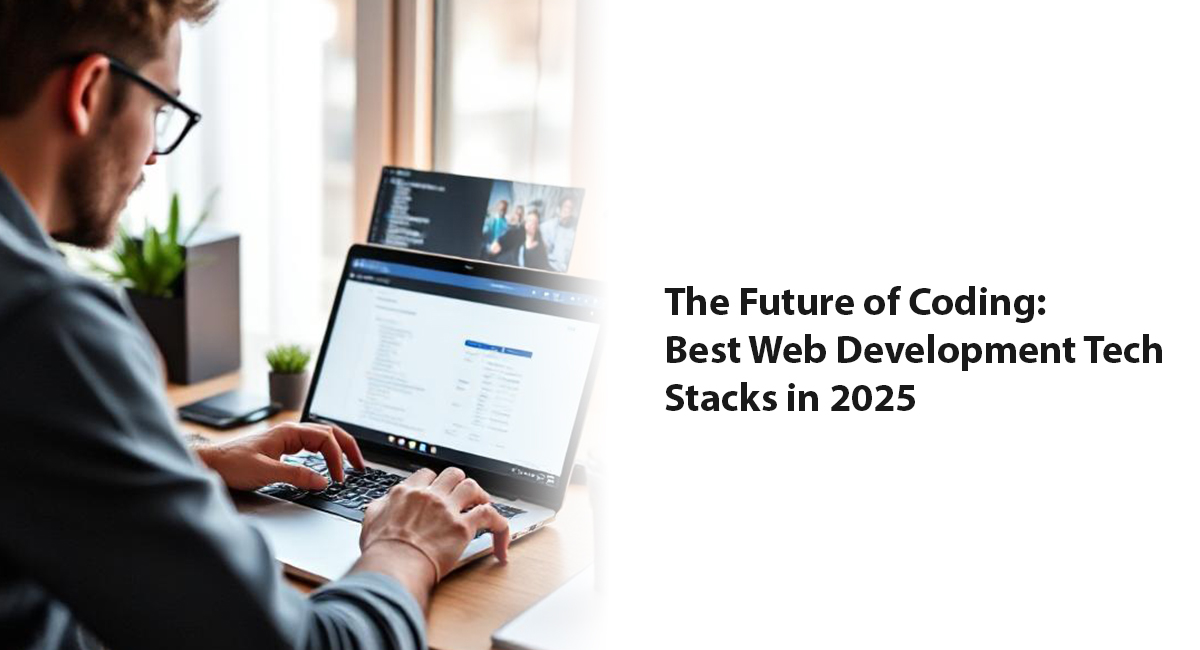
The area of web development is changing rapidly, and frameworks, alphanas and integrations are all influencing how businesses and individuals develop experiences online. With the ever increasing rivalry in the online sphere, the ability to select appropriate tools has been a prerequisite in establishing successful, trustworthy and scalable solutions. Understanding the best tech stacks for web development in 2025 can guide developers and entrepreneurs toward smarter decisions. These technical combinations have a trade-off as to both performance, flexibility, and usability, becoming future-resistant.
What Defines a Tech Stack in 2025?
A technological stack is a collection of developers, software, and code to create and follow through executing computers on the web. The focus in 2025 is on efficiency, flexibility and cross platform compatibility. Firms are now seeking stacks that will reduce time without reducing the quality of products to save on time.
A balanced stack typically comprises a robust front-end code, a stable back-end docket and a database to cater both the structured and unstructured data. It is not just concentrated in the technical performance, but also it offers scalable and secure environments that can be used during development
Popular Frontend Technologies
Frontend frameworks define the ways of interacting with an application or a web site. In 2025, there are only a few choices due to their flexibility and good developer bases.
- React.js – A library that is popular and enables any dynamically, reusable parts.
- Vue.js– Vue.js is a known simple yet flexible framework that entices small and medium projects.
- Angular -Preferred when it comes to enterprise level applications and structure matters.
These frameworks provide receptive design, seamless user-interfaces as well as connectivity with new backend engineering.
Leading Backend Technologies
Data processing, security and performance of an application require backwards frameworks and programming languages. In 2025, developers are connected with the solutions that are established and offer power and reliability.
Some of the most widely used include:
- Node.js – It is scalable and is compatible with JavaScript frontends.
- Django – A Python web selection framework that emphasizes security and speedy advancement.
- Ruby on Rails – Known to be clean and able to speed up the prototyping process.
- ASP.NET Core – A secure enterprise-grade application development framework.
Databases and Cloud Integration
Efficiency in managing data is very significant to any project. Data at times dictates the type of database to be used, and this is based on the application being used.
- Such Relational Databases as PostgreSQL and MySQL are reliable in structured data.
- Flexible data structure is more appropriate in NoSQL Databases such as MongoDB and Firebase.
Why Does the Right Tech Stack Matters?
The success of a web development project can be determined by the right choice of the tech stack. It does not only affect performance, but cost-effectiveness and long-term maintenance.
Some key benefits of the right tech stack include:
- Faster development time.
- Improved scalability for growing businesses.
- Better security measures.
- Enhanced user experiences.
By aligning a project’s goals with the most suitable technologies, businesses ensure smooth execution from development to deployment.
Trends Shaping 2025 Web Development Stacks
Several trends stand out in 2025, influencing which tech stacks are considered the most effective.
- Cross-Platform Development – Ensuring that stakeholders can use a stack to support mobile and web apps with minimal extra efforts is more desirable to businesses.
- AI and Machine Learning Integration – More applications are integrating smart functions, which need to interface with AI libraries.
- Serverless Architectures – Developers are moving to serverless frameworks as a way to save and gain more flexibility.
- Security-First Development – Data security is a paramount concern, and technology stacks are focused on in-built protection.
These trends ensure developers choose stacks not only for their immediate strengths but also for future adaptability.
Build Smarter with the Right Tech Stack
In 2025, web development is going to be more careful in choice of frameworks, programming languages, and data tools. With the best tech stacks for web development in 2025 to develop their web applications, it is possible to create secure, efficient, and user-friendly applications. Not only does the right stack minimise development problems, it also offers long term growth and maintenance. These stacks determine the construction of websites and applications with a high level of focus on cloud integration, security, and flexibility. Partner with Uniterrene Websoft to build future-ready web applications using the right tech stack for performance, security, and long-term scalability.
FAQs
What makes a tech stack suitable for web development in 2025?
A good stack offers a trade-off among speed, security, scalability and compatibility with the latest market tendencies to build a cloud-integrated application sketchy across more platforms.
Are there specific industries that benefit from certain stacks?
Indeed, security and payment frameworks that are highly integrative may seem desirable to industries such as e-commerce and lightweight stacks may play well with startups.
How can I decide on the best tech stacks for web development in 2025 for my project?
Assess the objectives of your project, finances and scalability requirements. Overall, the use of skilled developers assists in matching the appropriate tools to guarantee success in the long-term perspective.